New Pool Construction
Building beautiful, lasting pools designed for how you live.
Big Becks' Blog
No More Green Pool: How to Spot and Fix Algae Imbalances Fast
Intro
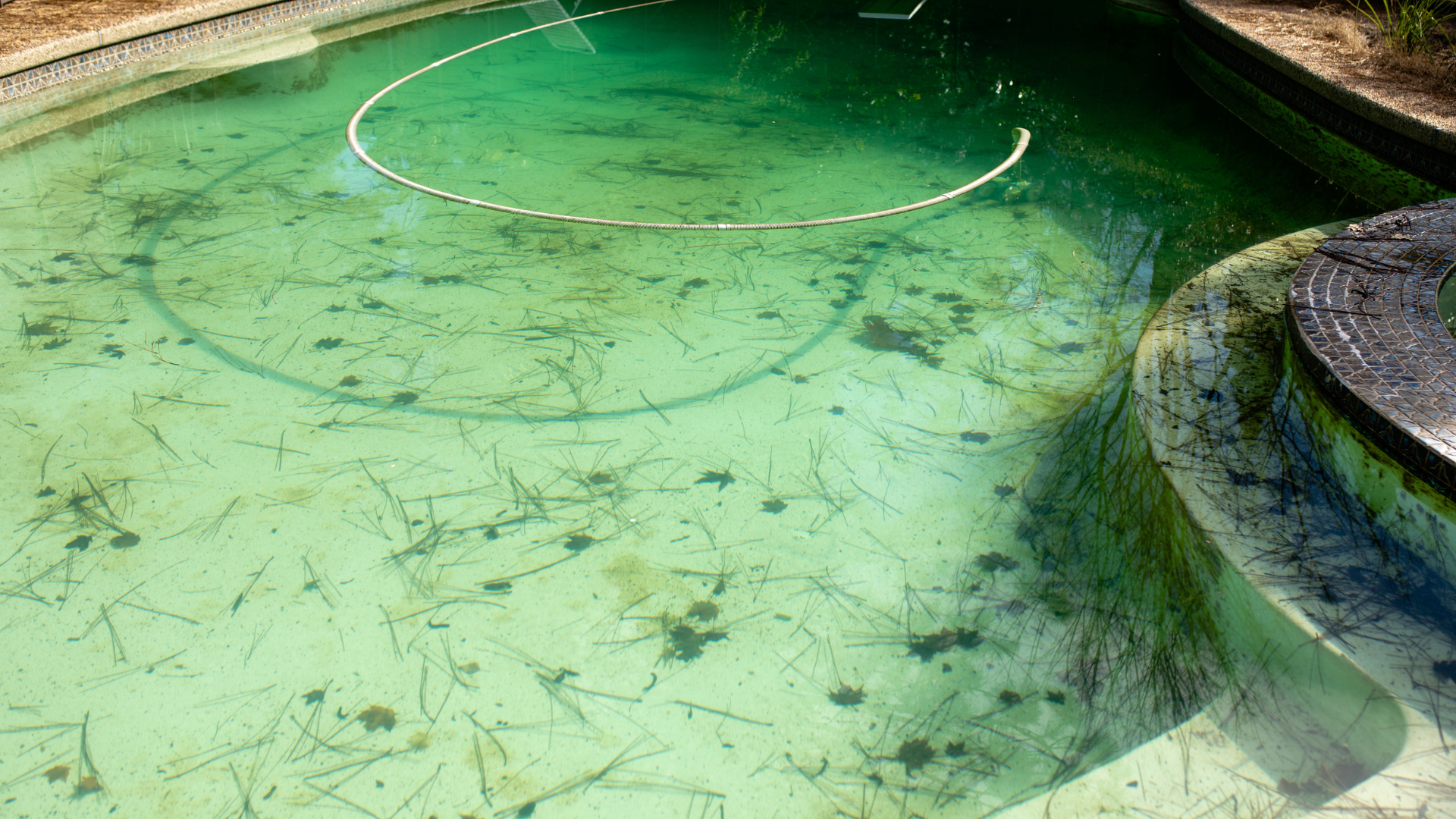
There is nothing quite as disheartening for a pool owner as walking out to the backyard and realizing your sparkling oasis has taken on a murky, swamp-like green hue. Algae blooms can seem to appear completely overnight, turning a beautiful swimming pool into an embarrassing mess over the course of a single humid weekend. While it feels like an absolute disaster, an algae invasion is simply a sign of a biological imbalance that can be corrected with the right strategy. The key to conquering algae without wasting hundreds of dollars on unnecessary rescue chemicals is speed and precision. By learning how to spot the earliest warning signs of an outbreak and executing an aggressive, targeted eradication plan, you can clear up your water and reclaim your summer fun in just a few days.
Catching the Early Warning Signs of an Algae Bloom
Most pool owners do not realize that an algae bloom actually begins long before the water turns visibly green. The absolute earliest indicator of an impending bloom is a subtle change in the texture of your pool surfaces; if you run your hand along the steps or walls and they feel slick, slimy, or soapy, microscopic algae spores have already anchored themselves and started building a protective biofilm layer. Around this same time, you will notice that your water loses its brilliant sparkle, taking on a slightly dull, hazy, or cloudy appearance that refuses to clear up with normal filtration. Chemically, your pool will give you a major warning sign in the form of rapid chlorine consumption, meaning you might add a standard dose of sanitizer only to find a reading of zero just a few hours later because the chlorine is working overtime fighting off the invisible microscopic invaders. Catching the problem during this hidden phase allows you to treat the water with a standard shock treatment, completely avoiding the heavy labor and dense chemical costs required once the pool completely turns into a swamp.
The Chemical Slam and Destruction Strategy
Once the water has turned completely green, a standard dose of sanitizer will no longer cut it, and you must shift into a heavy eradication protocol known as shocking or slamming the pool. You must begin by using a heavy-duty pool brush to vigorously scrub every single square inch of the walls, steps, and floor, which physically breaks open the slimy protective membrane of the algae colonies so your chemicals can actually reach them. Next, test and adjust your water chemistry to ensure your pH sits precisely between 7.2 and 7.4, because chlorine loses nearly two-thirds of its sanitizing strength if your pH is allowed to drift up past 7.8. Once the water is prepped, hit the pool after sunset with a massive dose of liquid chlorine or calcium hypochlorite shock to raise your free chlorine levels up to at least 15 to 20 parts per million, maintaining this incredibly high sanitation level consistently for 24 to 48 hours until all the live green algae has been completely oxidized.
Filtration and Clearing the Dead Algae Aftermath
As your massive shock treatment successfully does its job, you will notice a drastic color shift in your pool water, changing from a vibrant green to a milky, cloudy white or grey color. This cloudy appearance is actually a victory, as it means all the live algae is officially dead, but now you face the challenge of filtering millions of dead microscopic particles out of the water. To clear this remaining haze quickly, you must run your filtration pump continuously for 24 hours a day while closely monitoring the equipment’s pressure gauge, because dead algae accumulates rapidly and will clog your filter sand, cartridge, or D.E. grid within a matter of hours. Expect to backwash your system or clean the filter elements multiple times during this cleanup phase, and consider adding a dose of pool clarifier or flocculant to clump the tiny suspended dead cells together into larger masses, making it significantly easier for your filter to trap them or for you to vacuum them directly out of the pool through the waste line.
Conclusion
Dealing with a green pool is a frustrating rite of passage for almost every pool owner, but it is a problem that yields entirely to consistent chemistry and good old-fashioned filtration. The secret is simply not giving up halfway through the process; you must keep your sanitizer levels high until the water is completely blue and crystal clear, or the remaining spores will instantly trigger a secondary bloom. Once your pool is restored to its pristine state, maintaining a steady chlorine level and brushing the walls once a week will ensure that algae never gets the chance to steal your backyard oasis away from you again.
FAQ
Can I swim in a pool that has a live green algae bloom?
No, you should never swim in a green pool. While swimming pool algae itself isn’t generally harmful to human skin, an active bloom indicates that your water has zero residual sanitizer. This lack of chlorine creates a perfect breeding ground for dangerous pathogenic bacteria, including E. coli and pseudomonas, which can cause severe ear infections, skin rashes, and stomach illnesses.
Why did my pool turn green even though my chlorine reading is high?
This frustrating scenario is almost always caused by an excess of Cyanuric Acid (CYA), which is the stabilizer used to protect chlorine from the sun. If your CYA level climbs over 100 parts per million, it creates a condition known as “chlorine lock,” where your chlorine becomes chemically bound up and completely ineffective at killing algae, even though it still registers as a high number on your test strip.
What is the difference between green, yellow, and black algae?
Green algae is the most common variety, floats freely in the water, and is relatively easy to kill with standard shock treatments. Yellow algae, often called mustard algae, is a rare sheet-like strain that loves shade, brushes off easily, but is highly chlorine-resistant and requires much higher shock levels to destroy. Black algae is the most destructive variety, forming deep roots inside concrete and plaster walls with a heavy, waxy protective shell that requires aggressive physical wire-brushing and direct chemical scraping to eliminate.
How to Choose the Best Loop-Loc Vinyl Pool Liner for Your Pool
A swimming pool is one of the most valuable additions to any backyard, and its liner plays an essential role…
AMG SEO

Signs Your Pool Needs a Loop-Loc Liner Repair Instead of Replacement
A vinyl pool liner is one of the most important components of a swimming pool because it protects the pool…
AMG SEO
Why Hire a Vinyl Liner Pool Contractor on Long Island?
Installing a vinyl liner swimming pool is a significant investment that can transform your outdoor living space while adding lasting…
AMG SEO
No More Green Pool: How to Spot and Fix Algae Imbalances Fast
Don’t let a green pool ruin your summer. Discover how to spot the hidden warning signs of a biological imbalance…
Adrian Lasala
Crystal Clear All Summer: The Secret to Perfect Pool Water Chemistry on Long Island
Stop fighting cloudy water and algae. Discover the simple, science-backed approach to mastering your pool’s chemistry on Long Island, ensuring…
Adrian Lasala

Pool Closing Checklist for Long Island Winters (Expert Guide)
Winter weather on Long Island can be challenging for swimming pool owners. Freezing temperatures, snow accumulation, and prolonged periods of…
AMG SEO
Pool Financing Solutions
We have partnered with Lyon Financial to provide flexible financing options.